SMS vs. Email Marketing: Which Works Best?
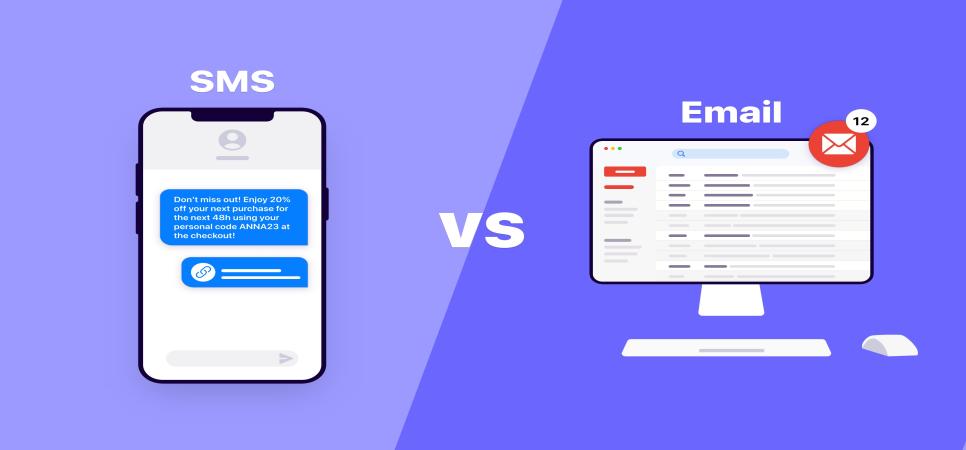
In today’s fast-paced digital world, businesses have a variety of channels at their disposal to reach customers. Among the most popular marketing strategies are SMS (Short Message Service) and email marketing. Both are effective ways to communicate with audiences, but each has its own unique strengths and limitations. So, which one works best for your business? Let’s dive into the comparison between SMS and email marketing to help you make an informed decision.
1. Reach and Open Rates
SMS Marketing:
SMS has an incredibly high open rate. Studies show that SMS messages have an open rate of around 98%, with most people reading messages within minutes of receiving them. This makes SMS one of the most direct ways to reach your audience. People are more likely to read and engage with an SMS due to the personal and immediate nature of text messages.
Email Marketing:
Email marketing, on the other hand, has a lower open rate compared to SMS. The average open rate for email marketing hovers around 20-30%, depending on the industry. While emails can still be highly effective, they face challenges such as inbox clutter, spam filters, and the risk of being overlooked, especially in a world of overflowing email inboxes.
Winner: SMS Marketing – The higher open rate and immediacy make SMS a more effective communication tool when you need to ensure your message gets seen.
2. Message Length and Content Type
SMS Marketing:
SMS messages are concise, with a 160-character limit (though many platforms now allow for longer messages). This forces marketers to keep messages short, direct, and to the point. The content often focuses on time-sensitive promotions, alerts, and reminders. Due to the brevity, SMS marketing tends to be more transactional, such as flash sales, appointment reminders, or limited-time offers.
Email Marketing:
Emails offer more room for creativity and content variety. You can add images, videos, links, and extensive text. This makes email marketing an excellent choice for detailed newsletters, product launches, brand storytelling, or offering in-depth information. You can segment your audience and tailor content to different user needs, making emails more versatile.
Winner: Email Marketing – With greater flexibility in content length and format, email marketing is better suited for delivering more comprehensive messages.
3. Engagement and Personalization
SMS Marketing:
SMS is a highly personal and immediate channel. People typically have their phones within arm’s reach, so SMS offers more opportunities for immediate action, whether it's clicking a link, making a purchase, or responding to a promotion. Additionally, SMS allows for personalization through the use of the recipient’s name and tailored offers based on previous interactions.
Email Marketing:
Emails also offer robust personalization options, such as addressing the recipient by name, customizing content based on user behavior, and targeting specific demographics. However, the level of engagement is typically lower than SMS, as people might check emails less frequently, and there’s often more friction involved in clicking through to the desired content (e.g., navigating through links, forms, etc.).
Winner: SMS Marketing – SMS tends to generate higher engagement due to its immediacy and personal nature.
4. Cost and ROI
SMS Marketing:
SMS marketing can be cost-effective, but it can also be expensive, especially for large-scale campaigns. Costs are typically based on the number of messages sent, and rates can vary depending on the country and carrier. However, given the high open rate and the potential for immediate action, SMS marketing often generates a strong return on investment (ROI) if used strategically.
Email Marketing:
Email marketing is one of the most cost-effective marketing methods. With a minimal investment in email marketing software and potentially some design resources, businesses can reach thousands of customers for a relatively low cost. Email also offers detailed analytics, enabling businesses to track open rates, click-through rates, and conversion rates, which helps fine-tune campaigns for better ROI.
Winner: Email Marketing – When it comes to cost-efficiency, email marketing typically wins, especially for businesses with large audiences and ongoing campaigns.
5. Regulations and Spam Concerns
SMS Marketing:
SMS marketing is heavily regulated to protect consumers from spam. In many countries, marketers are required to obtain explicit consent before sending SMS messages and must offer a clear opt-out mechanism. Violating these rules can result in fines or being blacklisted. Additionally, SMS spam filters are becoming increasingly sophisticated, so it’s essential to maintain proper opt-in and opt-out protocols.
Email Marketing:
Email marketing is also subject to regulations such as the CAN-SPAM Act in the U.S. and GDPR in Europe. Marketers must obtain consent before sending promotional emails and provide recipients with an easy way to unsubscribe. While there are fewer restrictions on email marketing compared to SMS, the risk of being marked as spam is a constant concern, which can hurt deliverability.
Winner: Tie – Both SMS and email marketing have regulations in place to protect consumers, but both also require careful adherence to avoid penalties.
6. Best Use Cases
SMS Marketing:
SMS is best for short, time-sensitive communication that demands immediate attention or action. Common uses include:
-
Flash sales or promotions
-
Appointment reminders
-
Order confirmations or shipping updates
-
Emergency alerts or notifications
Email Marketing:
Email is ideal for more detailed, ongoing communication. Use email marketing for:
-
Newsletters and content sharing
-
Product launches and announcements
-
Customer education and brand storytelling
-
Drip campaigns and customer nurturing
Winner: It depends on the use case – SMS is great for immediate, actionable communication, while email excels at building relationships and delivering comprehensive content.
Conclusion
So, which works best for your business: SMS or email marketing? The answer depends on your specific goals and audience. If you need to grab attention quickly, drive immediate action, and ensure high engagement, SMS is likely the better choice. On the other hand, if you're focused on delivering in-depth content, nurturing long-term relationships, and maximizing cost-effectiveness, email marketing is likely your best bet.
For many businesses, the most effective strategy will involve using both SMS and email marketing in tandem to create a comprehensive, multi-channel approach that delivers the best of both worlds. By understanding when and how to use each method, you can significantly boost your marketing efforts and better engage your audience.
Share This :
Latest Blog
How to Grow Your Business with Targeted SMS Messages
23 Feb, 2025
Increase Customer Engagement with Bulk SMS
23 Feb, 2025
5 Tips for Creating Engaging SMS Campaigns
13 Jan, 2025
Why SMS Marketing is a Game-Changer for Businesses
13 Jan, 2025